
The PharmaCampaigns Take · Coverage
Between visits: the work a call cycle can't reach
Every brand that takes pharmacy seriously runs a field team, and rightly so. A good representative is one of the most valuable things you have in the channel. They read a store in seconds, they carry relationships built over years, and they turn a planned call into something a spreadsheet never could. None of what follows is an argument against reps. It is an argument about the spaces between their visits.
Because a rep is one person with a route. And a route has edges.
Picture the visit that doesn't quite happen
A rep pulls up to a pharmacy on schedule. The one person who matters for the conversation, the pharmacist in charge, or the retail manager who signs off on the plan, is with a patient, on a break, or simply not in today. The rep waits as long as the day allows, leaves the materials, and moves on. The route doesn't pause.
Now ask a few honest questions.
Can the rep come back tomorrow? Usually not; tomorrow belongs to another town. When is that pharmacy next on the plan? Often weeks away. And in the meantime, what happened to the objective that visit was meant to carry? It waited. Not because anyone did anything wrong, but because the call cycle is a finite loop, and that store had come round at the wrong moment.
Now picture something that can't wait
A safety update lands. A competitor changes a price. A supply issue appears. An enrolment window opens with a hard closing date. The kind of thing that needs a real conversation in the store this week.
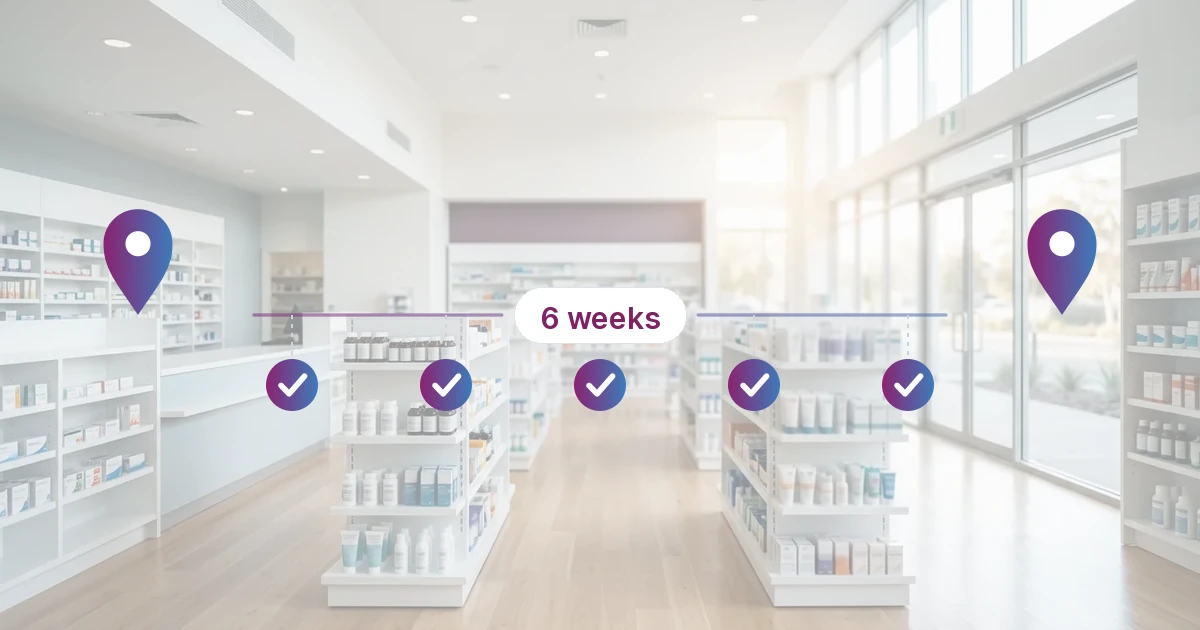
Where is that store in the cycle? Five weeks out.
Who reaches it before then? On a field model alone, no one. The work is real, the moment is now, and the next planned visit is more than a month away. Multiply that by every store sitting at the wrong point in the loop, across the whole country, and you can see where quiet leakage lives. This is coverage variability, and it is expensive precisely because it is invisible.
The coordinator on the phone
Here is the part that sits alongside the rep, not against them.
A PharmaCampaigns campaign coordinator works by phone, and that changes the physics of the problem. The pharmacist was with a patient? The coordinator calls back when they are free. The store is five weeks from its next visit? The coordinator reaches it today. The right contact only works Tuesdays? The coordinator works around it, because a phone does not have a route.
A coordinator can pick up the objective the rep could not land, carry a time-sensitive message the week it actually matters, and reach the pharmacies a field plan was never going to include: the remote ones, the low-frequency ones, the ones a rep would never visit. Not to replace the visit. To cover the gap the visit leaves behind.
Why it is the Portal, not just the phone
A phone call on its own is a nice gesture. It is not execution.
What makes this an execution layer is that every coordinator works inside the Portal. Each conversation is a structured task with guided steps, so nothing rests on memory or goodwill. Each outcome is captured, time-stamped and validated, so you see what actually happened in the store, not what was hoped for. The coordinator brings the human reach; the Portal makes it accountable.
Together, they are the point.
The line that matters
It is the Portal and the coordinator, working as one, that means PharmaCampaigns executes and validates your brand's in-store activity in pharmacies across Australia, including the ones a rep would never visit, at a fraction of the cost of reaching them any other way.
Your field team stays exactly where it is strongest: in the room, building the relationships that only happen in person. The coordinator and the Portal carry everything that falls between those rooms, and everywhere the rooms do not reach.
The question to take to your next channel review
Of every store your brand needs active this month, how many will a visit actually reach, and who is covering the rest?
Cover the stores between visits.
A 20-minute call maps where your field plan reaches, where it doesn't, and what it costs to cover the rest, executed and validated in the Portal.