The Execution Brief · Category POV
The dark store problem: who executes your brand when the call cycle ends?
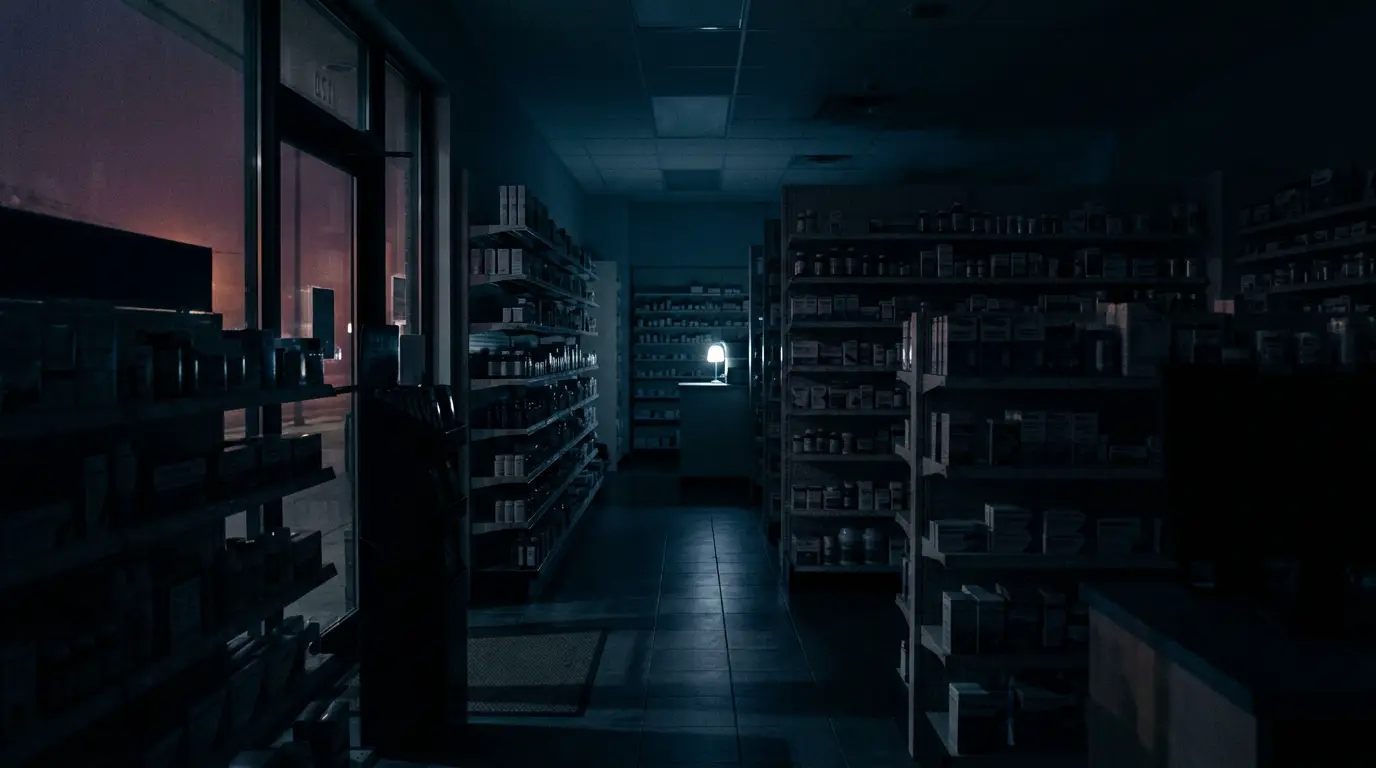
Every pharmacy brand manager can recite their field coverage. Almost none can tell you what happens in the stores their team doesn’t visit. That silence is the biggest unmanaged line in the channel plan.
The arithmetic nobody puts on a slide
There are around 5,800 community pharmacies in Australia. A well-resourced consumer health field team (call it ten to fifteen territory managers) physically reaches somewhere between 1,000 and 1,500 of them, on a call cycle of six to eight weeks. That’s the good scenario. Many brands run leaner teams, longer cycles, or share reps across a portfolio.
Run the subtraction and sit with it: for most brands, two-thirds or more of the network never sees a human representative. Not quarterly. Not annually. Ever.
These are what we call dark stores, not because they’re failing, but because from the brand’s side of the table, they’re invisible. No briefing lands there. No planogram is checked. No pharmacist hears why your product deserves the recommendation. And crucially: no data comes back. The dashboard doesn’t show a problem because there is no dashboard.
Dark doesn’t mean small
It’s tempting to assume the unvisited tail doesn’t matter, that the top 1,200 stores are where the volume is. Two problems with that.
First, the tail is collectively enormous. Thousands of stores each doing modest volume in your category out-sell the flagship stores in aggregate for most established brands. Second, dark stores are where brand equity erodes fastest: planograms drift, tickets go missing, a competitor’s rep (or a substitution incentive) meets zero resistance, and the pharmacist’s recommendation, the single most powerful influence at the counter, defaults to whatever is front of mind. Which is never the brand that’s never shown up.
The launch got sign-off because it was visible. The erosion never makes a slide, because nobody is there to see it.
Why the field model can’t fix this alone
This isn’t an argument against field teams. A good rep does things nothing else can: builds relationships with key accounts, negotiates ranging, handles complex clinical conversations. The problem is purely economic. A fully-loaded field visit runs to a couple of hundred dollars once salary, vehicle, admin and windscreen time are counted. Multiply that across 5,800 stores at any respectable frequency and the model breaks, no CFO will fund it, and no rep team could staff it.
So the industry quietly accepted a strange equilibrium: execution excellence for the top of the market, and hope for the rest.
What the alternative looks like
The fix isn’t more people in cars. It’s changing what has to travel. A briefing doesn’t need a visit: a 90-second video reaches every store in the network the same morning. A planogram check doesn’t need a visit: a pharmacy assistant photographs the bay and the photo is verified within hours. A recommendation conversation doesn’t need a visit: it needs a pharmacist who’s been briefed, a structured prompt at the right moment, and a professional service fee that respects their time.
What it does need, and where technology-only plays fail, is a human layer chasing the last 30%: coordinators on the phone confirming stock, nudging the busy stores, making participation feel like a relationship rather than a notification. The Portal puts the work in front of stores; Campaign Coordinators make sure it happens.
Do that, and the dark map lights up. Not with visits, with verified actions: photos, briefings watched, interventions logged, every one time-stamped and attributable to a store. The unvisited two-thirds of the network stops being a hope and becomes a managed asset with a completion rate.
The question to take to your next channel review
Ask one question of your current plan: “What is our execution model for the stores we don’t visit?” If the honest answer is “the wholesaler ships there”, that’s distribution, not execution. Distribution puts stock in the building. Execution decides whether it’s on the right shelf, at the right price, with a team that can speak to it.
For most brands, the fastest growth available in pharmacy isn’t a bigger launch or a broader range. It’s simply switching the lights on in stores they already supply.
See your brand’s dark-store map.
A 20-minute call includes a coverage model on your store list, where you’re lit, where you’re dark, and what lighting it up costs.